
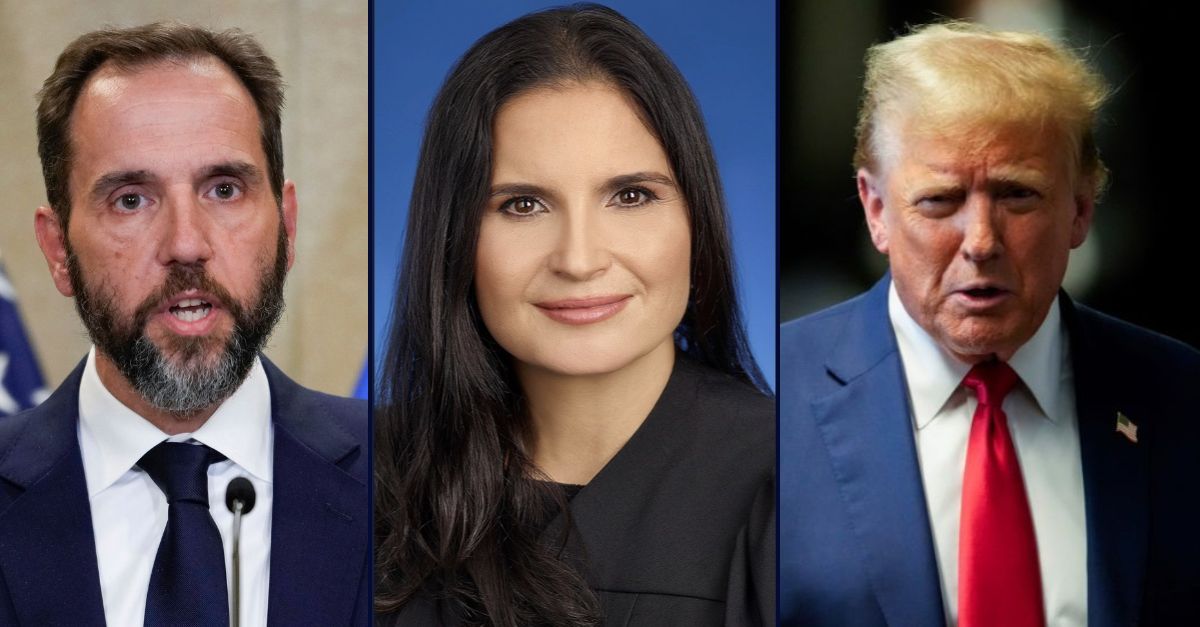
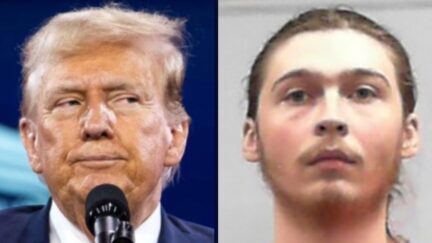
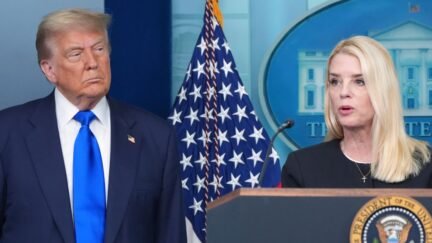
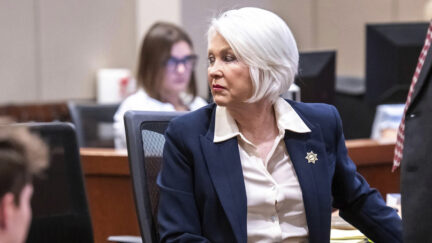
Left: Then-special counsel Jack Smith speaks to the media about an indictment of then-former President Donald Trump, Aug. 1, 2023, at an office of the Department of Justice in Washington (AP Photo/J. Scott Applewhite, File). Center: U.S. District Judge Aileen Cannon (U.S. District Court for the Southern District of Florida). Right: Donald Trump speaks to members of the media before departing Manhattan criminal court, Monday, May 6, 2024, in New York (AP Photo/Julia Nikhinson, Pool).
U.S. District Judge Aileen Cannon on Monday permanently blocked U.S. Attorney General Pam Bondi and her successors from releasing special counsel Jack Smith's report on the Mar-a-Lago classified documents investigation outside the DOJ, but she did not go so far as to order the destruction of Volume II.
The order, which comes before Cannon's injunction was set to expire and before the 11th U.S. Circuit Court of Appeals acted on an emergency request to halt the proceedings, is an effect of the judge's July 2024 dismissal of the Espionage Act prosecution against President Donald Trump. Because Cannon concluded that Smith was unlawfully appointed as special counsel and then invalidated all of his acts, the Trump-appointed judge found Monday that Smith didn't have any right to use discovery to create the report in the first place.
The conclusion is almost certainly music to the ears of attorneys for Trump and his former co-defendants, valet Waltine Nauta and Mar-a-Lago property manager Carlos de Oliveira. In the lead-up, Trump lawyer Kendra Wharton asserted Smith's report was "unlawfully prepared" in light of Cannon's order and that Volume II was "ultra vires work product" — beyond his power to author.
"The appropriate remedy is the invalidation of all of Smith's ultra vires acts, including his subsequent preparation and submission of Volume II," Trump's team added, saying such a remedy would "protect the integrity of the constitutional role of the judiciary."
It appears Cannon heard that loud and clear. The judge pummeled Smith and said he at least violated the spirit of her dismissal order by creating a final report.
"Defendants moved for emergency relief to bar the impending release of Volume II, all the while Special Counsel Smith and his team separated from the Department of Justice; 'referred' the criminal case to the United States Attorney's Office for the Southern District of Florida; and delivered Volume II to the Attorney General in a flurry of emergency motion practice leading up to the Presidential Transition—leaving no counsel of record available with actual knowledge of the particulars of the complex factual record in this case," Cannon recounted. "To say this chronology represents, at a minimum, a concerning breach of the spirit of the Dismissal Order is an understatement, if not an outright violation of it. The Dismissal Order focused on the charging document on which the criminal proceeding hinged—the Superseding Indictment—and dismissed it. But it went on to explain that 'all' of Special Counsel Smith's actions in connection with this proceeding were ultra vires and must be set aside.
"Nevertheless," the judge continued, "rather than seek a stay of the Order, or clarification, Special Counsel Smith and his team chose to circumvent it, for months, by taking the discovery generated in this case and compiling it in a final report for transmission to then-Attorney General Garland, to Congress, and then beyond. The Court need not countenance this brazen stratagem or effectively perpetuate the Special Counsel's breach of this Court's own order."
Smith expressed in recent months that he desired to speak about Volume II during a deposition and in a public hearing before Congress, but on both occasions he noted that Cannon's injunction was in place and he didn't want to violate the judge's order. To ensure his compliance, Smith said, he didn't review Volume II before his testimony and didn't address its findings about Trump's allegedly willful retention of classified documents and obstruction of their return.
Now Cannon has hinted at a potential violation of her order based on the fact of the report's existence itself. Further, the judge came up with a reason to say the report should not go public, unlike the John Durham, Robert Mueller, David Weiss, and Robert Hur reports.
"Moreover, while it is true that former special counsels have released final reports at the conclusion of their work, it appears they have done so either after electing not to bring charges at all or after adjudications of guilt by plea or trial. The Court strains to find a situation in which a former special counsel has released a report after initiating criminal charges that did not result in a finding of guilt, at least not in a situation like this one, where the defendants contested the charges from the outset and still proclaim their innocence," she said.
While the Durham report included information about acquitted individuals, the Mueller and Hur reports were issued while Trump and Joe Biden were president and neither were charged in those investigations.
But in the interest of "basic fairness" to Trump, Nauta, and de Oliveira and to prevent a "manifest injustice," Cannon permanently blocked the DOJ and Bondi "or her successor(s)" from "releasing, sharing, or transmitting Volume II of the Final Report or any drafts of Volume II outside the Department of Justice" or "otherwise releasing, distributing, conveying, or sharing with anyone outside the Department of Justice any information or conclusions in Volume II or in drafts thereof."
Cannon notably denied the argument embraced by Nauta and de Oliveira that Volume II should be destroyed, the fear of which animated emergency appeals by the Knight First Amendment Institute and American Oversight. Both groups maintain that the public has a right to access at least a redacted version of Volume II, arguing that the report Cannon reviewed in her chambers will shed light on the allegations and investigation of a former candidate who is currently the U.S. president.
American Oversight executive director Chioma Chukwu reacted to the Cannon decision by vowing to use "every tool available to force this information into the open and to defend the public's right to the truth through the release of this report."
"Judge Cannon's ruling continues a troubling pattern of decisions that shield the president from public scrutiny and place secrecy above the public's right to know," said By permanently blocking the release of Volume II of the Special Counsel's report and denying our effort to seek a stay while our appeal moves forward, the court has ensured that the public is denied information of extraordinary national importance," Chukwu said. "This sweeping order once again gives the president exactly what he wanted — continued concealment of the factual record underlying the historic investigation into his misconduct. American taxpayers funded this investigation, and they have a right to know what their government uncovered, particularly on matters of national security."
Similarly, the Knight Institute's executive director Jameel Jaffer stated that the "significance" of the Mar-a-Lago report shows "there is really no question that both the common law and the First Amendment require the report's release."
Wharton reportedly heaped praise on Cannon for her "courage."
"Judge Cannon's courage and judicial resolve on these important due process issues should be recognized and taught in law school classrooms across America," the Trump attorney said, according to Politico.
Follow Law&Crime:

Comments