
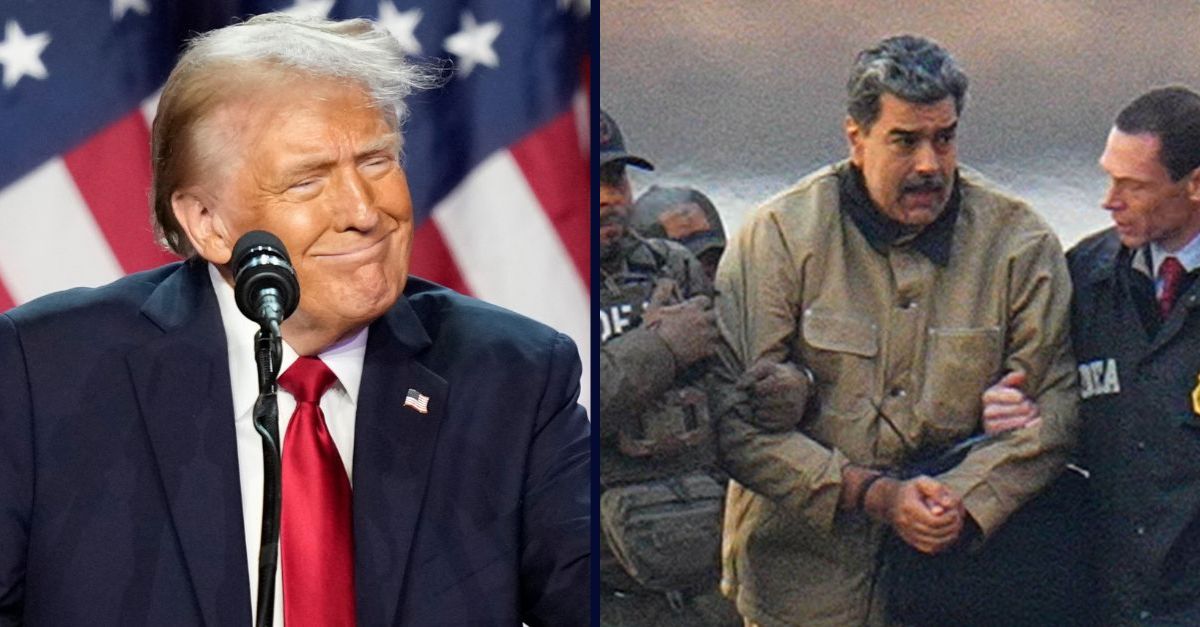
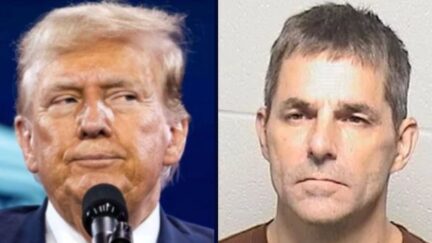
Left: Donald Trump speaks at an election night watch party, Wednesday, Nov. 6, 2024, in West Palm Beach, Fla. (AP Photo/Alex Brandon). Right: Photo by: XNY/STAR MAX/IPx 2026 1/5/26 Nicolas Maduro and his wife, Cilia Flores, are seen in handcuffs after landing at a Manhattan helipad, escorted by heavily armed Federal agents as they make their way into an armored car en route to a Federal courthouse in Manhattan on January 5, 2026 in New York City.
Captured Venezuelan leader Nicolas Maduro's legal team moved to dismiss his narco-terrorism indictment Thursday, claiming that the Trump administration has already ensured any verdict in the case will be "constitutionally suspect."
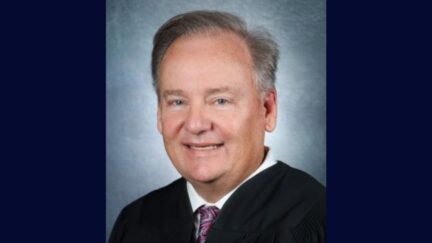
In a letter to Senior U.S. District Judge Alvin Hellerstein, veteran defense attorney Barry Pollack, remembered for representing WikiLeaks' Julian Assange, asked for permission to withdraw from the case if the jurist declines to toss out the case.
According to Pollack, the laws of Venezuela dictate that the country will shoulder the costs of Maduro's legal defense, but the U.S. has moved to block that funding — meaning the government is trying to deny Maduro his counsel of choice and put the American taxpayer on the hook instead.
"The United States government, through the Department of Treasury Office of Foreign Assets Control (OFAC), initially granted a license to Mr. Maduro's counsel of choice to accept funds from the government of Venezuela to represent Mr. Maduro. Unilaterally and without explanation, however, OFAC subsequently amended the license such that it now precludes the receipt of defense costs from the government of Venezuela," the letter explained.
Pollack further claimed that Maduro "lacks his own funds to retain counsel" and that the Trump administration's "interference" with the funding of his defense amounts to "particularly unjustifiable" meddling with due process rights.
In the end, it could mean that Pollack will have no choice but to withdraw, and that would make "any verdict" against Maduro "constitutionally suspect," the lawyer stated.
"If OFAC's interference with Mr. Maduro's ability to fund his defense persists, undersigned counsel cannot remain in the case, nor can Mr. Maduro be represented by any other retained counsel," the filing claimed. "Not only would the Court need to appoint counsel and foist the cost of Mr. Maduro's defense on the United States taxpayers, despite the willingness and obligation of the government of Venezuela to pay Mr. Maduro's defense costs, but also any verdict against Mr. Maduro would be constitutionally suspect."
Pollack added that a trial "under these circumstances" would be "constitutionally defective and cannot result in a verdict that will withstand later challenge."
"The United States government, even while authorizing myriad commercial transactions with Venezuela, is prohibiting counsel from receiving untainted funds from the government of Venezuela, despite Venezuela's obligation to fund Mr. Maduro's defense," the filing concluded.
The case was previously mired in a brief attorney controversy shortly after the Trump administration's raid and Maduro's arrest in Venezuela.
After Pollack entered an appearance in the case, Bruce Fein, another lawyer of note, asserted in court that he too had been retained to represent Maduro.
A spat ensued on the court docket between Pollack and Fein. That ended with Fein stepping aside from the "mess," claiming there had been a major misunderstanding.
"Counsel sought admission and entered an appearance in good faith based upon information received from individuals credibly situated within President Maduro's inner circle or family indicating that President Maduro had expressed a desire for Counsel's assistance in this matter," Fein said, offering an explanation.
Follow Law&Crime:


Comments