
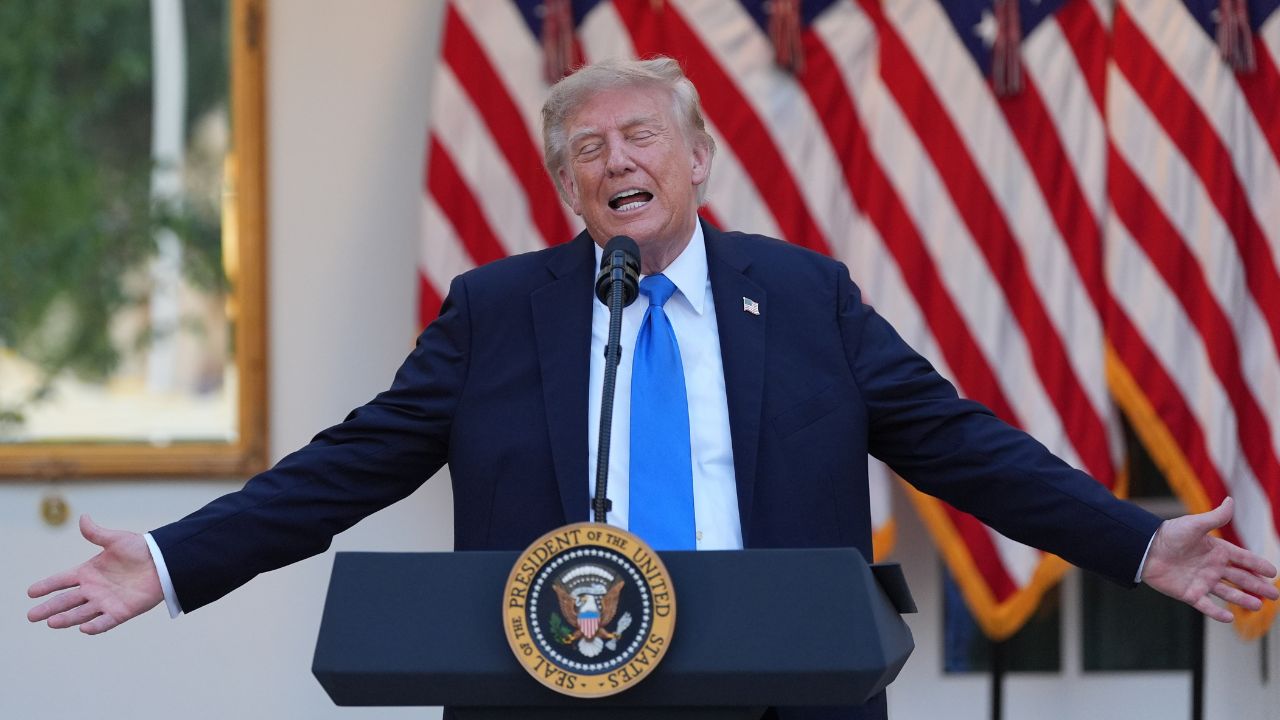
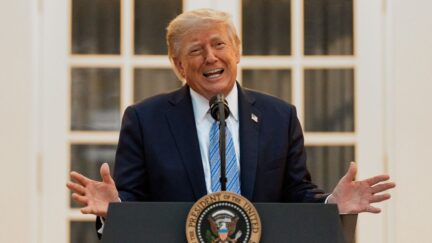
President Donald Trump speaks during an event with Republican lawmakers in the Rose Garden of the White House, Wednesday, Sept. 2, 2026, in Washington (AP Photo/Alex Brandon).
The British Broadcasting Corporation (BBC) appears to have a "solid case" for securing unredacted rulings from Donald Trump's Jan. 6 prosecution that may help it defeat the president's defamation lawsuit in Florida, but it's no certainty what happens next in the Sunshine State.
That was the overarching takeaway from a hearing in Chief U.S. District Judge James Boasberg's courtroom in Washington, D.C., last week, the results of which are now available in transcript form.
The BBC's attorneys on Tuesday filed a notice alerting U.S. District Judge Jeffrey Kuntz and U.S. Magistrate Judge Enjoliqué A. Lett about the Sept. 3 hearing, as well as Boasberg's direction that the defendant "work with [this Court] to at some point tee up the hearing on executive privilege if and when that is necessary."
The transcript of the proceedings revealed that Boasberg thought the BBC "made convincing arguments" and has a "decent chance" of getting what it seeks if those documents turn out to be "necessary."
Trump sued the BBC for $10 billion over the documentary "Trump: A Second Chance" after the BBC admitted the piece "gave the mistaken impression that [he] had made a direct call for violent action" on Jan. 6 by editing "excerpts from different points" of the president's speech from the Ellipse out of sequence.
To bolster its defense, the BBC has asked Boasberg to unseal to the "greatest extent possible" various executive privilege rulings that went against Trump during special counsel Jack Smith's grand jury probe.
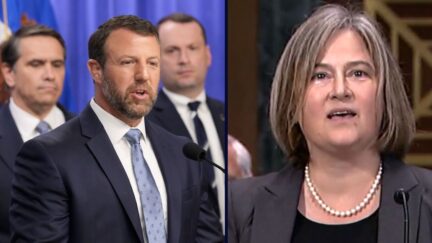
During the Sept. 3 hearing, attorney Maxwell Mishkin focused on unsealing executive privilege determinations as to six witnesses: Ivanka Trump, Donald Trump Jr., Cassidy Hutchinson, Greg Jacob, plus former White House lawyers Eric Herschmann and Pat Cipollone.
"So what we understand from Jack Smith's report, the special counsel's report, is that there were discrete assertions of executive privilege as to particular witnesses, and then once the special counsel's office was stymied by the President's repeated assertions of executive privilege, more of an omnibus proceeding as to multiple witnesses that again was adjudicated and has been unsealed in part," Mishkin said. "Your Honor, of course, has seen these opinions, so you know what they say. "
"The magistrate judge in Florida doesn't. And so to the extent that Your Honor and then-Chief Judge Howell have adjudicated the exact questions that are teed up, which is to say were the discussions that the President had with these particular advisors and the advisors we don't know in the runup to January 6 and on January 6, were those protected by executive privilege, were those protected by attorney-client privilege," the attorney went on. "We understand — we can see from the redacted opinions that those questions have been asked and answered. What we don't know is specifically as to which witnesses and the specific — the fact-specific rationale why it was rejected."
Mishkin added that the BBC has "been unable to serve" subpoenas on Trump's eldest son and daughter.
Overall, Boasberg was "sympathetic" to the position of the BBC, but repeatedly indicated he won't act unless or until the executive privilege issue is "crystallized" in Florida.
"Because at the end of the day, I think their overarching point is a pretty good one, which is, they get sued, and then when they try to get discovery into the motivation behind the President's actions which they argue shows that their reporting was true, they get stymied. So that's sort of a pretty unfair result," Boasberg said.
To turn the tables on Trump's lawsuit, the BBC has sought discovery that it anticipates will show Trump can't "prove that he did not foment or incite the January 6 Capitol riot" and can't recycle "already-rejected privilege claims."
"And I think there's a decent chance you do [get these opinions and orders] because I think you've made convincing arguments, but it's got to be teed up properly," Boasberg said.
"I think you have made a solid case for such release if they are necessary," the judge said, noting the "standard requires a need to avoid a possible injustice in another judicial proceeding."
DOJ attorney Jeremy Newman agreed that the parties need to "wait to see what happens" because it's not clear how — or even if — the Florida judges will rule on the issue.
"[W]e would urge you to deny the petition, but I think if Your Honor is concerned about the possibility of unfairness down the line, I think that it's important not to invade the secrecy of the grand jury before it's necessary to do so," Newman said. "And so the most appropriate way to handle it if Your Honor is concerned about that would be to deny the petition without prejudice but note that if the magistrate judge or the district judge in Florida indicates that they need to see what's under the redactions of those opinions to resolve a pending motion before them, that you would entertain a further request."
"And Your Honor could certainly do so quickly," the DOJ attorney added. "And I think that would appropriately capture the posture that we're in, which is, you know, maybe the judges in Florida will decide this executive privilege issue and maybe they won't based on the sort of posture of that case that could go in any number of different directions."
Follow Law&Crime:


Comments